

.avif)


In every organization securing digital assets, there are more people who know what needs monitoring than there are people who can build the monitors themselves.
A compliance officer knows exactly which transaction patterns or risky counterparties would breach internal policy. The risk manager knows which positions would need an immediate review, while a treasury lead knows which liquidity shifts could have detrimental impacts to their business. Each team can describe the risk in a sentence, but few are equipped with the technical know-how to turn that sentence into a live monitor without having to route their request through the security team.
And as onchain risks grow more complex, spanning more chains, protocols, and attack vectors than ever before, the demands placed on security teams are growing faster than any manual configuration process can sustain. The volume and specificity of what organizations need monitored has outpaced what any team can build and maintain by hand.
When building the controls becomes a bottleneck
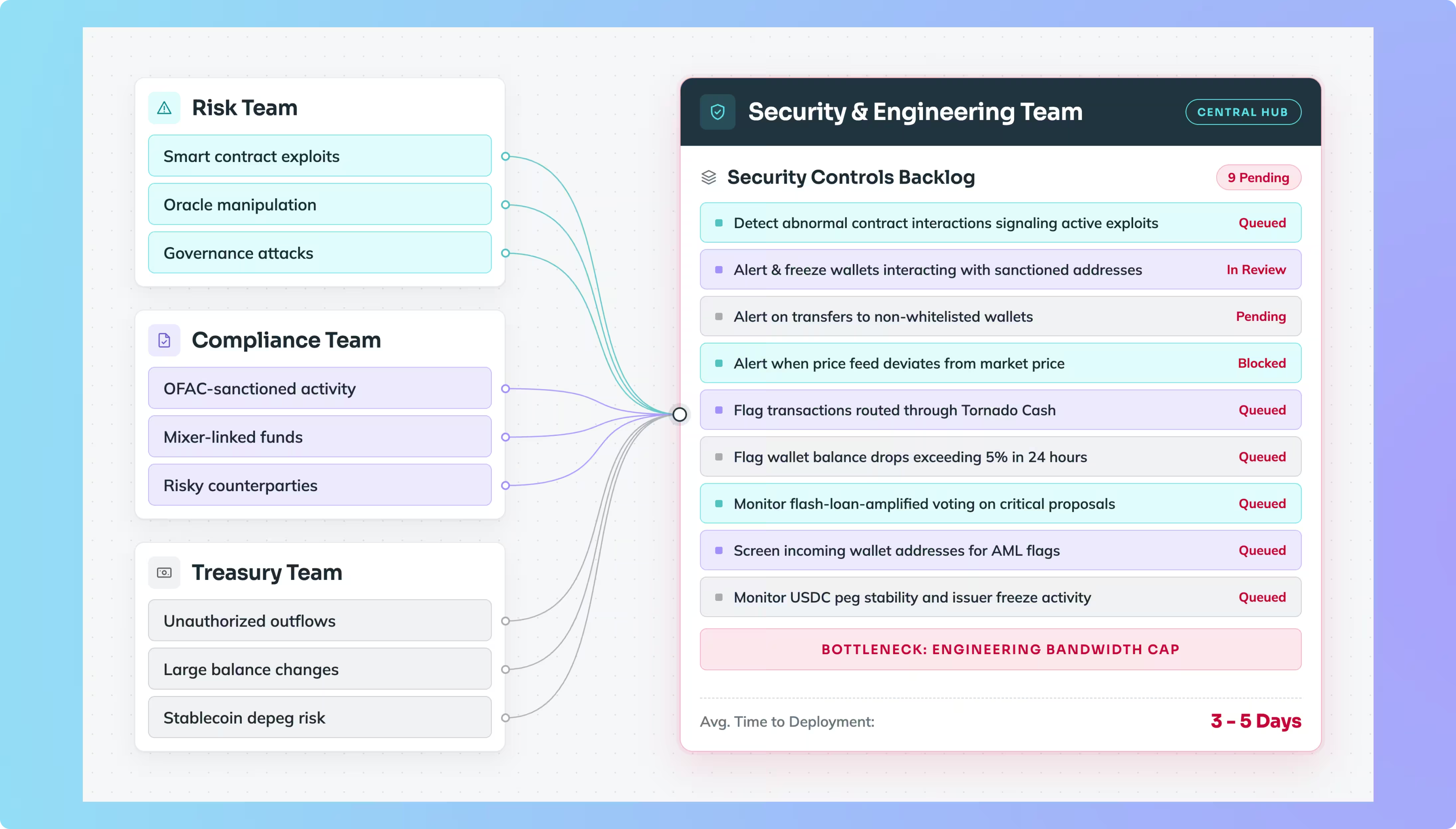
Monitors that should exist ultimately wait behind the security team's backlog, and coverage ends up reflecting who had time to configure it rather than what the organization actually needs watched. The consequences compound quickly:
- Coverage is capped by team size, even as risks expand. Onchain risks are multiplying: more attack vectors, more protocols, more cross-chain complexity. Security teams can only configure what they have had time to understand and build, and as the risk environment grows faster than the team can keep pace, coverage falls further behind.
- Every request joins a queue. Anyone who needs a new monitor, whether sitting in the compliance, risk, treasury, fraud, or other team, has to route it through the security function, which is already absorbing the monitoring requirements of the entire organization on top of its own.
- Simple monitors can take days to ship. The cycle from "we need to watch for this" to "this is live" runs through interpretation, translation, and configuration. What should take minutes takes days, and during that window, the exposure the team already knows about goes unwatched.
Their business has the knowledge. What it lacks is a direct path from that knowledge to a live monitor.
Today Hypernative is closing that gap.
Introducing Agent Studio
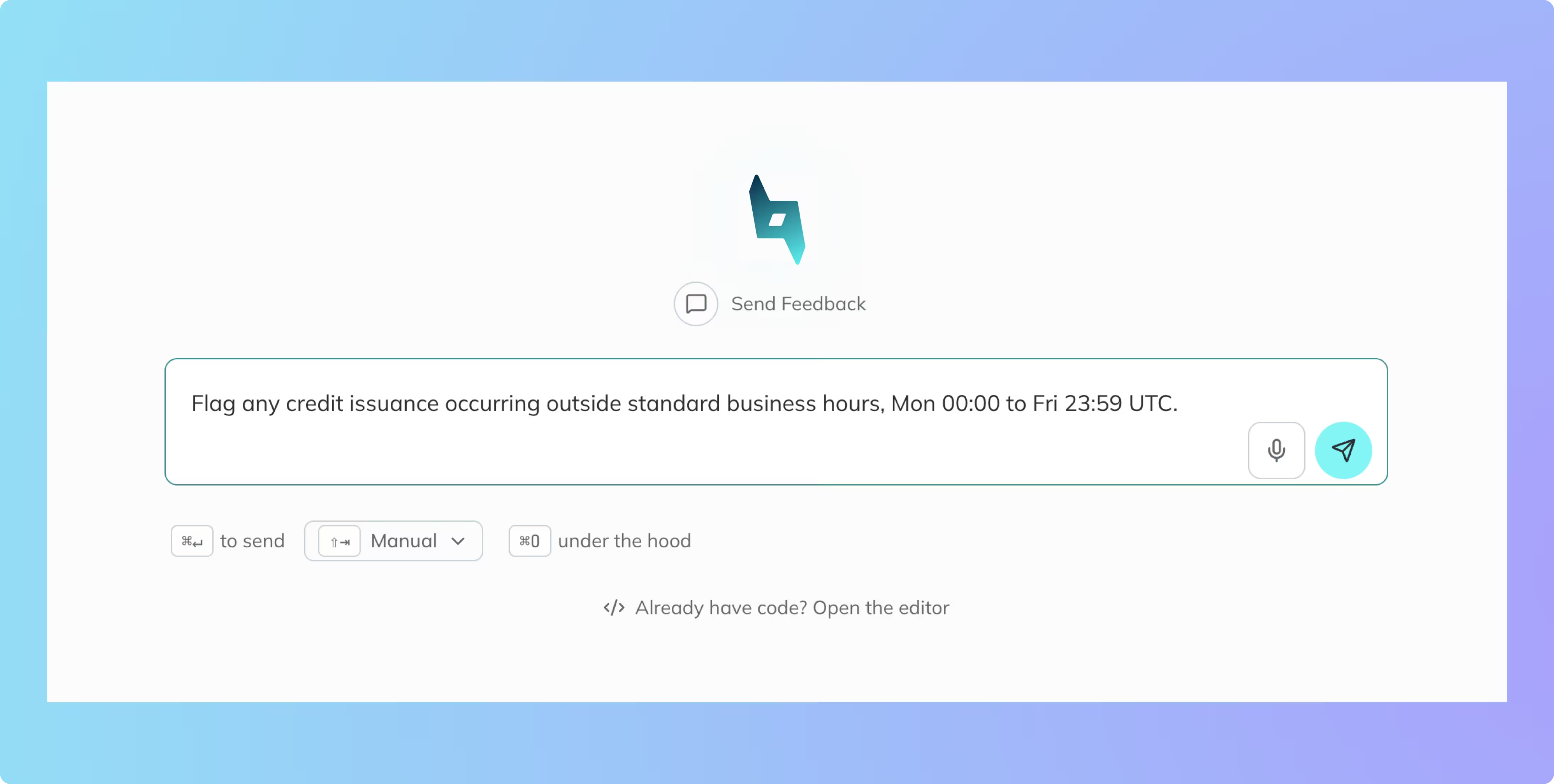
Hypernative Agent Studio builds custom onchain monitoring agents from a plain-language prompt. It enables teams that are closest to an organization’s onchain risks to simply describe what to monitor and generate a complete, working agent configured against the right contracts, thresholds, trigger conditions, or other parameters relevant to their organization. A technical reviewer can then inspect the result, adjust if needed, and approve it before it gets deployed.
It is predicated on Hypernative's Agent Builder, the no-code engine teams already use to define sophisticated monitoring logic across chains and protocols. Agent Studio removes the last barrier that remained: needing to know how to build the monitor yourself.
How it works
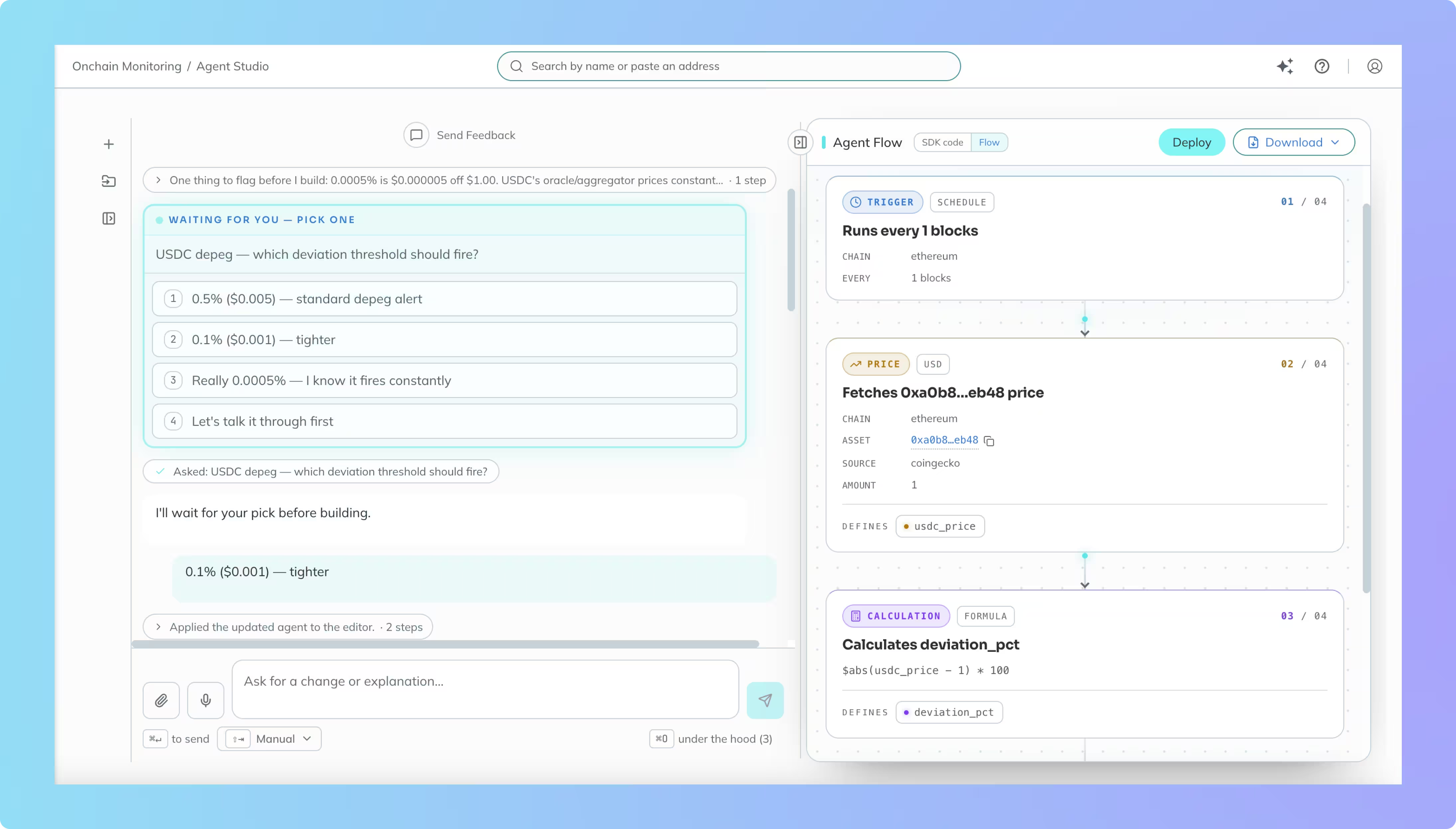
To start building a new custom security agent, all that's needed is an initial explanation of the onchain risk in the prompt box (for example: 'Alert me when USDC deviates more than 0.1% from its $1.00 peg'), and Agent Studio gets to work researching your real risk environment and surfacing custom monitoring options calibrated to live data. The engine builds a complete proposed agent, with all the logic, thresholds, and triggers required to make it work.
Before anything goes live, you see exactly how the agent is constructed. Every condition and trigger is visible in a transparent, easy-to-read flow, with full technical depth available for the teams that need it. Your security team can then review the proposal, refine it, and approve. All it takes then is a few clicks to toggle it live, from intent to deployed control in minutes, with no engineering queue or custom code required.
As a result, coverage is no longer capped by team size, and because anyone who understands the risk can now build the control themselves, requests stop queuing because there is no longer a handoff: the person who identifies the risk is the person who builds the monitor. And a monitor that used to take days now takes minutes, from a plain-English description to a deployment-ready agent.
This means that the full expressive range of the hypernative platform is now available through plain-English language: time-based checks, contract-event and function-call triggers, cross-chain logic, and position or liquidity conditions. You can build a new agent from scratch or point Agent Studio at your existing agents and refine them the same way.
What it means for your team
Agent Studio democratizes the process of building custom onchain monitors. The engineering know-how that used to be a prerequisite is no longer a gate, so anyone with a stake in your organization's digital asset security can describe the coverage they need and have a working agent built in minutes. The result is that the people closest to each risk can act on it directly. For example:
- A compliance team member could create a monitor for any interaction between a company wallet and a sanctioned or high-risk address.
- A risk manager could track when collateralization or utilization on a protocol they are exposed to crosses a set threshold.
- A treasury analyst could watch a specific pool for a sharp shift in liquidity conditions.
- A trading desk could catch large swaps that move price in the pools they trade.
- A fraud analyst could surface unusual outflow patterns across the wallets they oversee.
Each of these is described in the same language the person would use to explain it in a meeting, and none of it deploys without a technical reviewer signing off. Agent Studio proposes the agent and shows its logic, while the security team approves before it goes live.
To put that concretely, here are a few examples of what teams are already building with Agent Studio:
- Financial Institutions: "Flag any credit issuance occurring outside standard business hours: Monday 00:00 to Friday 23:59 UTC."
- Regulated Stablecoin Issuers: "Alert me when token 0x6781d5631bfe47432b089e64e3eab3b6edd26177 is transferred to an address denied by our Screener API default policy, excluding burn and mint addresses."
- Fund Managers / Tokenization Protocols: "Alert me on any outflow from 0x684404F2AEBAD87a6803F13741B1d638Bfe2C671 that occurs outside the authorized redemption window of Friday 08:00–12:00 UTC."
- Asset Managers: "Alert me when LBTC total supply exceeds $1B and automatically unwind my position when that threshold is reached."
- Protocols: "On every block, verify that the total supply of XYZ minted across all chains does not exceed the locked BTC threshold."
These are real prompts that produce real, production-grade agents. The security controls organizations have always needed but never had the time or technical resources to build are now a sentence away.
Part of a growing suite of AI capabilities
Agent Studio is the newest capability to go live under the Hypernative ION umbrella, the growing suite of AI features infused across our platform that are designed to help teams identify the risks specific to their operations, deploy the protections they need, and stay continuously secure as their business grows.
When we introduced the ION vision last month, we described a world in which AI complements, enhances, and speeds up the work that onchain security teams handle to map risk exposure, configure the right controls, analyze what alerts are telling you, and keep coverage current as operations and the threat environment both change. Agent Studio joins our Automated Triage Reports as working proof of that vision in customers' hands.
More capabilities are being added to the suite on a rolling basis, each addressing a different part of the gap between where most organizations' security posture is today and where it needs to be. Each is built on the same principle that Agent Studio demonstrates: the AI handles the analytical work and proposes the configuration work, but your security team stays in control of every decision that matters. Nothing goes live without your explicit approval.
Get started
Agent Studio is live in production and available to all Hypernative customers today. Log in to start building, or reach out to your customer success manager to walk through it with your team.
Not yet a Hypernative customer? Request a demo to see it in action.
.avif)